he mere mention of Shanghai Shenhua and Manchester United in the same breath might raise eyebrows among European football purists. Yet the connection is more tangible than a casual observer might assume. In 2012, when Didier Drogba traded Stamford Bridge for the Hongkou Football Stadium, the move sent shockwaves through both the Premier League and the Chinese Super League. Drogba, a Champions League winner with Chelsea and a player who had tormented Manchester United for years。suddenly became the face of Shanghai Shenhua. That transfer wasn't just a headline;it was a cultural collision. For Shenhua fans, it was a statement of intent. For United supporters, it was a reminder that the global football economy had shifted. The ripple effects are still felt today, as Chinese clubs continue to eye Premier League talent and United keeps a watchful eye on the Asian market.Manchester United's own history with Chinese football is less about direct transfers and more about market presence. The club has toured China multiple times, playing pre-season friendlies in Shanghai and Beijing。
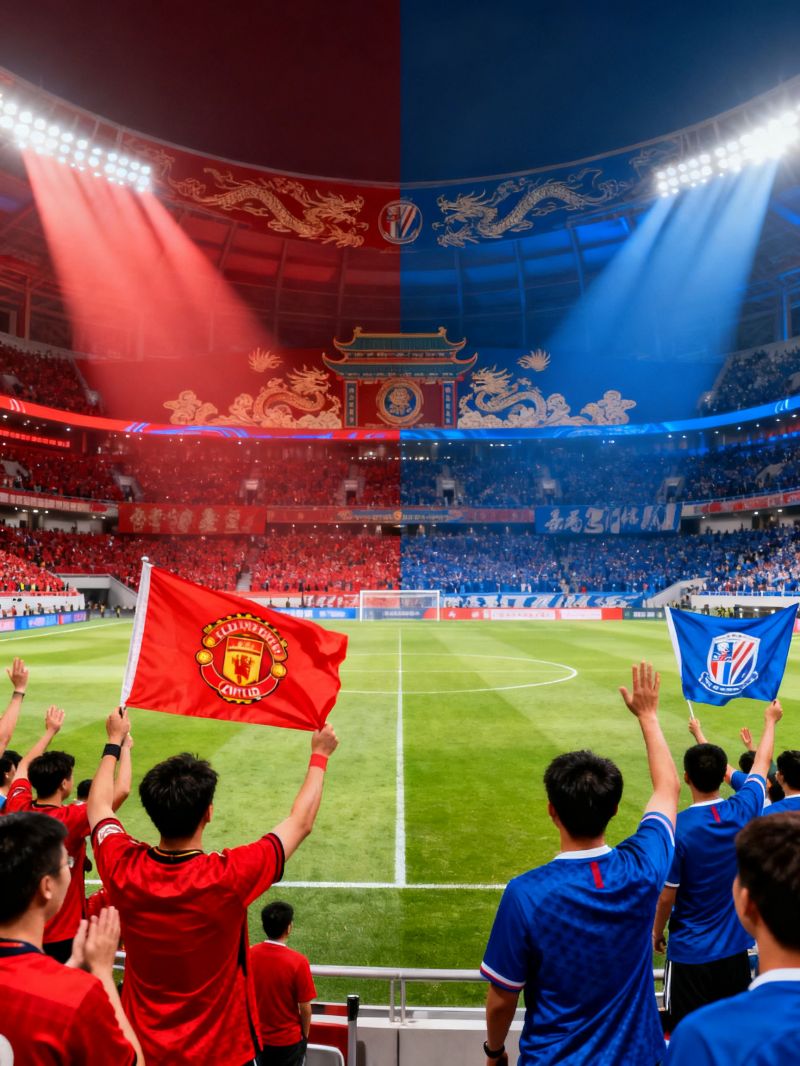
drawing massive crowds. In 2016, United faced Borussia Dortmund in Shanghai's International Champions Cup, and the city buzzed with red shirts—some genuine United fans, others curious locals. What struck me was the number of Shanghai Shenhua scarves mingled with United jerseys in the stands. That visual said more than any marketing report: football fandom in Shanghai is layered, not monolithic. Shenhua, founded in 1993, is the city's oldest professional club, and its supporters are fiercely loyal. Yet they also consume Premier League football with the same passion. The two clubs don't compete for the same trophies, but they compete for the same eyeballs in a crowded sports market.On the pitch, the stylistic contrast between Shanghai Shenhua and Manchester United is stark. Shenhua, under various managers, has often relied on a pragmatic, counter-attacking style—solid at the back, quick on the break. United, for all its recent struggles, still carries the DNA of attacking football, a legacy from Sir Alex Ferguson's era. When Shenhua signed Carlos Tevez in 2017, the Argentine's brief stint in Shanghai was a curious footnote. Tevez had won everything at United, and his move to China was seen by many as a retirement fund. He lasted less than a year, scoring four goals in 16 appearances. The experiment failed, but it highlighted a key difference: United's global brand attracts players for glory;Shenhua's project, at least then, attracted them for money. That dynamic is shifting as the CSL tightens its financial regulations。but the memory lingers.What fascinates me most is the youth development angle. Manchester United's academy is legendary—the Class of '92, Marcus Rashford, Mason Greenwood. Shanghai Shenhua has its own youth setup, but the pipeline is less prolific. In 2019, Shenhua's U19 team toured England。playing against United's youth sides. The results were lopsided—United won comfortably—but the experience was invaluable. One Shenhua coach told me afterward that the gap wasn't just physical;it was cognitive. United's kids anticipated plays two steps ahead. That gap, however, is narrowing. Shenhua has invested in grassroots coaching and partnerships with European clubs. It's a slow burn, but the ambition is clear. United, meanwhile, has opened a themed entertainment center in Beijing, betting on long-term brand loyalty. The two clubs are playing different games—one chasing immediate results, the other building a legacy.
Off the field, the commercial ties between Shanghai Shenhua and Manchester United are more about indirect competition. Both clubs vie for sponsorship deals in a crowded Asian market. United's shirt deal with TeamViewer, for instance, was partly motivated by the club's desire to expand its Chinese fanbase. Shenhua, backed by the Greenland Group。has secured local sponsors but lacks United's global reach. A Shenhua executive once admitted to me that United's merchandising operation is a benchmark they study closely. Yet Shenhua has something United doesn't: deep roots in a single city. When Shenhua plays at home, the Hongkou Stadium becomes a cauldron of local identity. United's global fanbase is vast but diffuse. That local authenticity is Shenhua's edge. In a world where football clubs increasingly feel like multinational corporations, Shenhua still feels like Shanghai's club. United, for all its glory, feels like everyone's club—and no one's.
Looking ahead, the relationship between Shanghai Shenhua and Manchester United will likely remain one of parallel paths rather than direct intersection. Transfer rumors will surface occasionally—a young Shenhua star linked to United, or a veteran United player linked to China—but the days of Drogba and Tevez are over. The Chinese Super League's spending spree has cooled, and United is focused on rebuilding its Premier League dominance. Still, the cultural exchange matters. Shenhua's fans watch United's matches;United's scouts monitor Asian talent. That mutual awareness enriches both clubs. Football is a global language。and these two clubs speak it with different accents. The story isn't about rivalry;it's about respect. And in a sport increasingly dominated by financial muscle, that respect is worth more than a transfer fee.